
Hampden 72-Hour Release Source
No HCSO web page lists each person released during a rolling three-day window. There is also no public jail roster to filter, no sheriff app with release names, and no web-retention rule. A useful 72-hour review begins with a narrow date range sent to the HCSO Records Access Officer. It then uses the controlling court docket to explain the legal action.
That distinction prevents a false result. The sheriff’s annual reports and Massachusetts Cross-Tracking data count events in the aggregate. They cannot answer whether one person left during the prior three days. Likewise, Massachusetts VINE covers MA DOC only. It is not the missing Hampden County release list.
Check Hampden Three-Day Releases
Set the period before searching. Use inclusive dates and, when possible, add the likely time. A Friday-through-Monday inquiry is more precise than asking for every release in a vague “recent” period. HCSO may need to redact protected fields, and an overbroad request can increase review work or fees.
- Identify the exact HCSO facility and collect the person’s full name, variants, birth detail if lawfully known, booking number, and docket number.
- Write the start and end dates for the suspected three-day period. State that the request is for the identified person’s existing release event.
- Ask for actual release date and time, release code or reason, destination, releasing site, booking number, and case or mittimus reference.
- Check MassCourts by docket number for bail, sentence, dismissal, probation, warrant, or later event. Contact the clerk if online access is not available.
- Follow any transfer. A DOC commitment, warrant authority, federal handoff, or immigration destination means HCSO custody ended without proving community return.
HCSO’s records page accepts requests by email or mail. Its telephone number is for questions and request-status checks during posted hours, not for submitting a request by phone or voicemail. For an event likely limited to today, the Jail Releases: 24 Hours page keeps the period tighter.
A three-day search can cross more than one legal event. For example, the docket may show a court release on one date while HCSO completes its final review on the next. Another case can then add a warrant or commitment. Keep each date under its own label: court action, bail posting, transfer, and actual custody exit. Do not collapse them into a single “release date.” If the likely facility is regional, also identify the originating county or committing agency so HCSO can locate the right record.
Hampden 72-Hour Record Fields
Because there is no public feed, the field table is a request checklist. Each field answers a different part of the custody change. Ask HCSO to use the labels in its existing system and allow lawful redaction rather than asking staff to create a new narrative.
| Field | Three-day use |
|---|---|
| Full name and booking number | Matches the correct person and admission within the wider period. |
| Releasing facility | Separates the Main Institution, WCC, WMRWC, and Stonybrook event. |
| Admission date | Prevents an older custody cycle from being confused with the recent one. |
| Actual release date/time | Places the executed event inside or outside the requested window. |
| Release type/code | Identifies bail, court release, time served, sentence end, or another basis. |
| Destination | Distinguishes community return from transfer or continuing custody. |
| Mittimus or docket | Connects the sheriff event to the court order and other possible holds. |
A photograph is separate from the release-event confirmation. Include it as its own identified item only when needed.
Ask for electronic production and permit redaction of exempt fields. If a fee may apply, request an itemized good-faith estimate before work passes a stated amount. Massachusetts generally requires access or a compliant written response within ten business days, though production can take longer when review, exemptions, extensions, or another custodian are involved. No HCSO page posts a special fee for a release record or booking photograph. The statewide fee framework should not be turned into an invented county charge.
The official county records page is the central substitute for a rolling feed.
Open HCSO’s Records Access Officer page to confirm the current written-request channels.
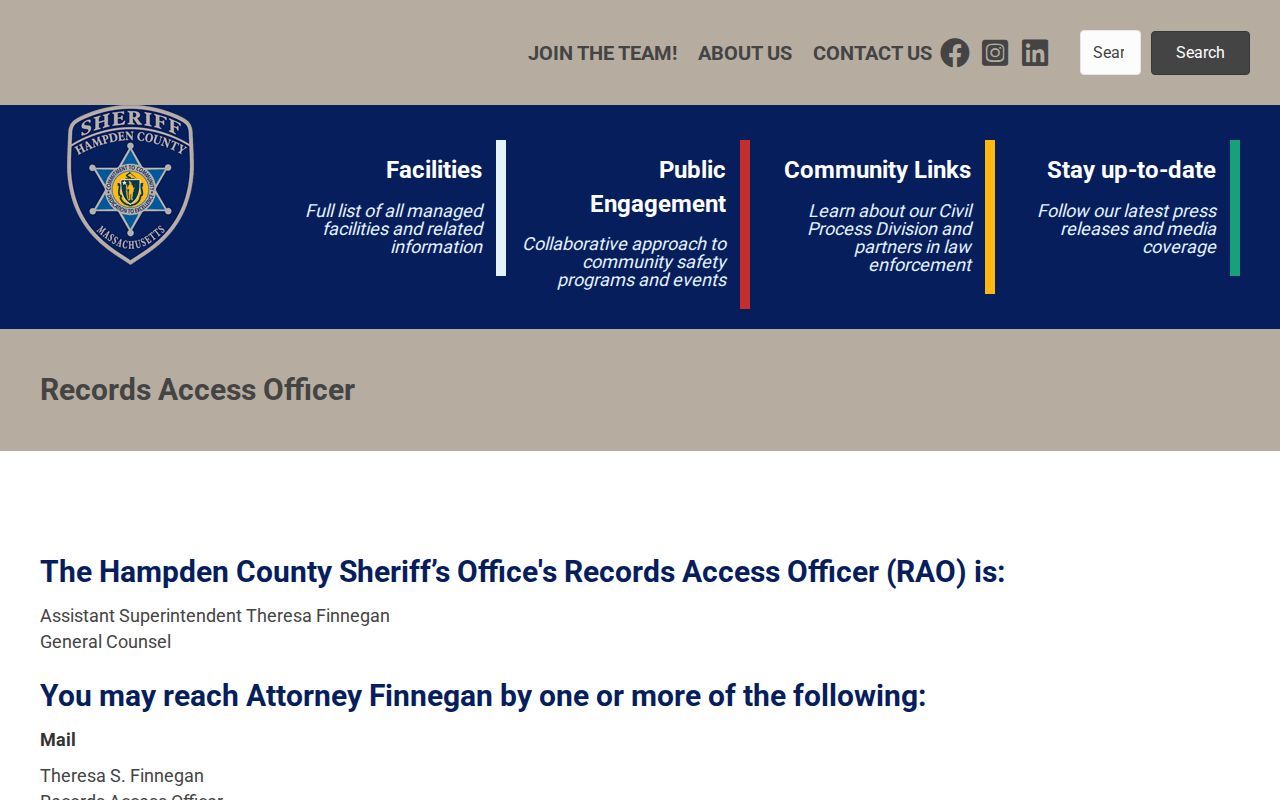
Its contact rules help route a three-day request to the actual holder of the HCSO record.
Hampden Weekend Release Review
A three-day window is most useful when the exact event date is uncertain. Court action, staff release review, and the actual exit may occur at different times. A weekend period can also cross office closure days even though custody operations continue. HCSO does not publish a universal holiday schedule or a promise that an event will be ready for public production by a fixed hour.
The Western Massachusetts Regional Women’s Correctional Center publishes weekend bail-processing times, but those times do not create a countywide release schedule. They apply to bail at that site. Court releases, sentence expirations, transfers, civil discharges, and holiday operations can follow other processes. The Main Institution publishes no universal clock.
Use the wider range to catch the event, then verify its legal and physical parts. A docket may show that bail was set or a case ended. Only the HCSO event establishes when the person left sheriff custody, and the destination field shows whether another custodian took over.
Note: A three-day records range improves date matching but does not turn an annual dashboard into a real-time named release list.
Hampden Release Code Mismatch
HCSO’s annual research archive documents a local data issue that matters in a multi-day review. In the 2023 report, 14 records coded for time served were grouped with release at court because the time-served detail did not migrate reliably from court to HCSO systems. The report is transparent about that limitation.
This does not invalidate the sheriff event. It means the event type should be checked against the court docket instead of interpreted from one code alone. HCSO uses local pretrial categories such as bail, release at court, and release through video. The state’s broader dictionary also counts some agency transfers as releases from one population.
The research archive shown below provides aggregate context, not names.
View HCSO’s release-report archive for the source behind this local coding caution.
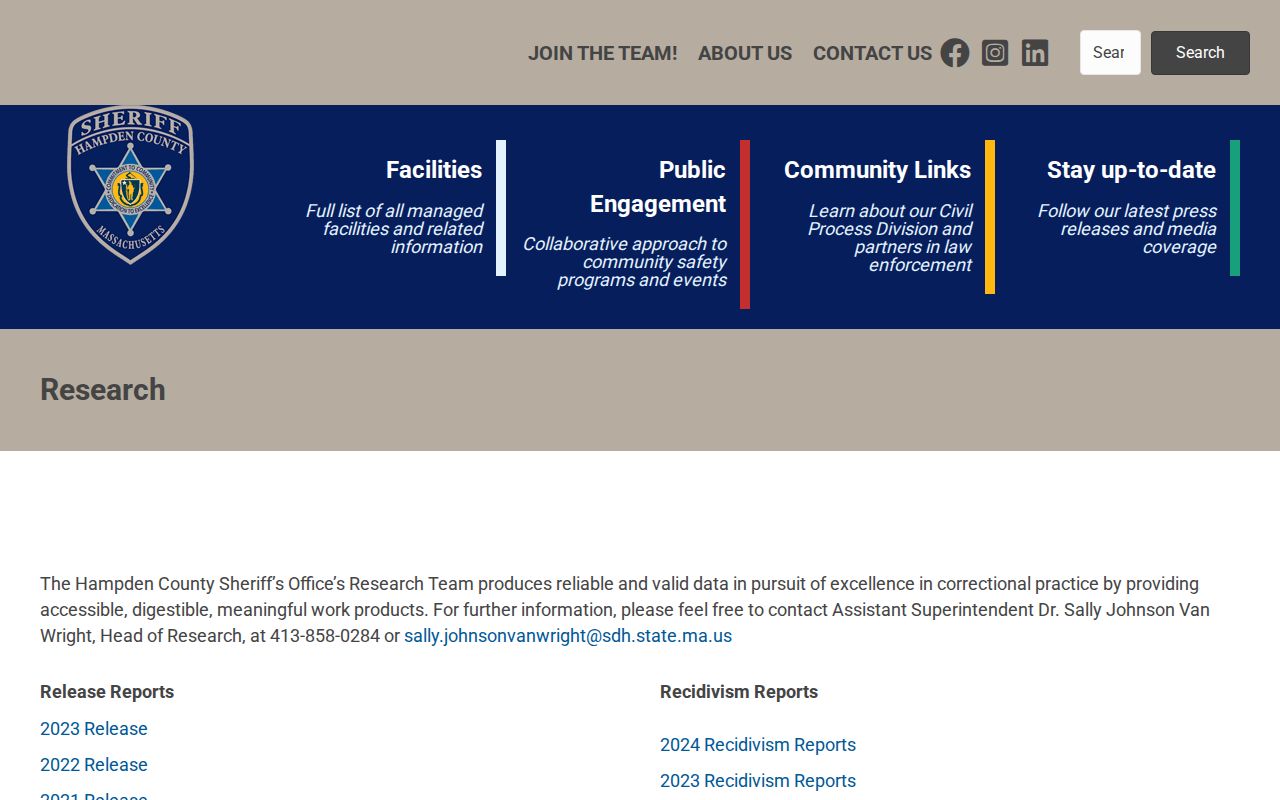
Use its definitions to interpret a returned code, while relying on the individual HCSO record and docket for the actual person.
Hampden Aggregate Release Counts
The Massachusetts Cross-Tracking system receives aggregate Hampden data from the sheriff’s Jail Management System. Filters can narrow counts by agency, date period, and release type, and the resulting data may be downloaded. No name, booking record, or person-level 72-hour status comes from that tool.
Aggregate data can answer a trend question, such as how event types compare over time. It cannot prove that someone was released over a weekend. Nor is it necessarily updated in real time. Reconstructing a name list from totals would create claims the source does not support.
The captured state dashboard makes that boundary visible.
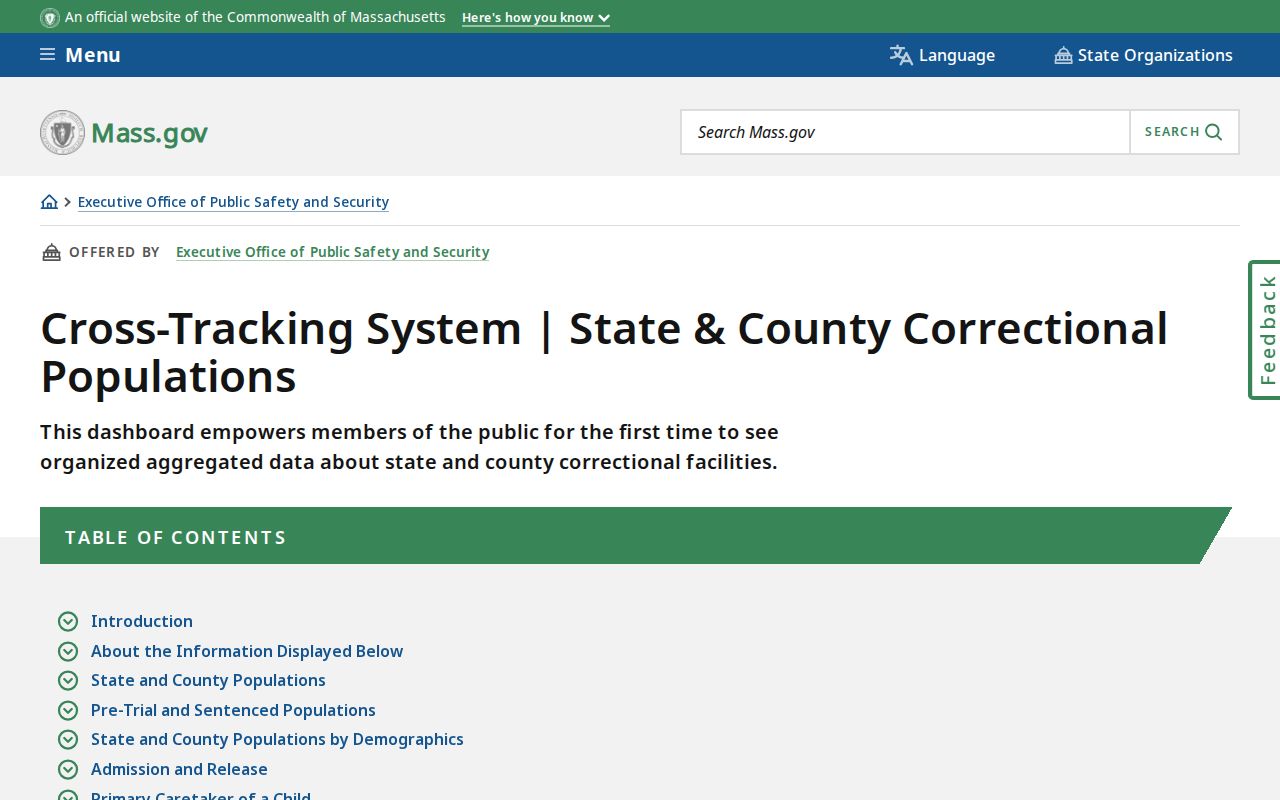
Keep the dashboard labeled as statistical context whenever it appears beside a named-person records process.
Route Hampden Release Follow-Up
The final destination controls the next check. A return to the community ends HCSO custody, though probation or parole may still apply. A transfer to MA DOC belongs in the state record and Massachusetts VINE. The Commonwealth says only MA DOC participates in VINE, so a missing VINE entry cannot settle an ordinary HCSO jail release.
Federal custody requires the BOP locator and federal docket when applicable. An ICE handoff requires the ICE detainee process. A movement from the Main Institution to WMRWC can remain within an HCSO placement and may not be a community release at all. Stonybrook is a civil treatment commitment, so its discharge record and committing court should not be framed as an ordinary criminal-jail sentence.
The Western Massachusetts Regional Women’s Correctional Center can hold people whose controlling cases began outside Hampden. A three-day inquiry should name the originating court if known, especially when the public record points to Worcester or another county. That detail can explain why a Hampden-only docket search fails. At the Main Institution, both pretrial and sentenced populations are held, so the request should distinguish bail or court release from sentence completion and an agency transfer.
MassCourts preserves many legal events, but most public online criminal searches need an exact docket number. A missing name-only result is not proof of no case.
The official MassCourts public search provides court context for a multi-day inquiry.
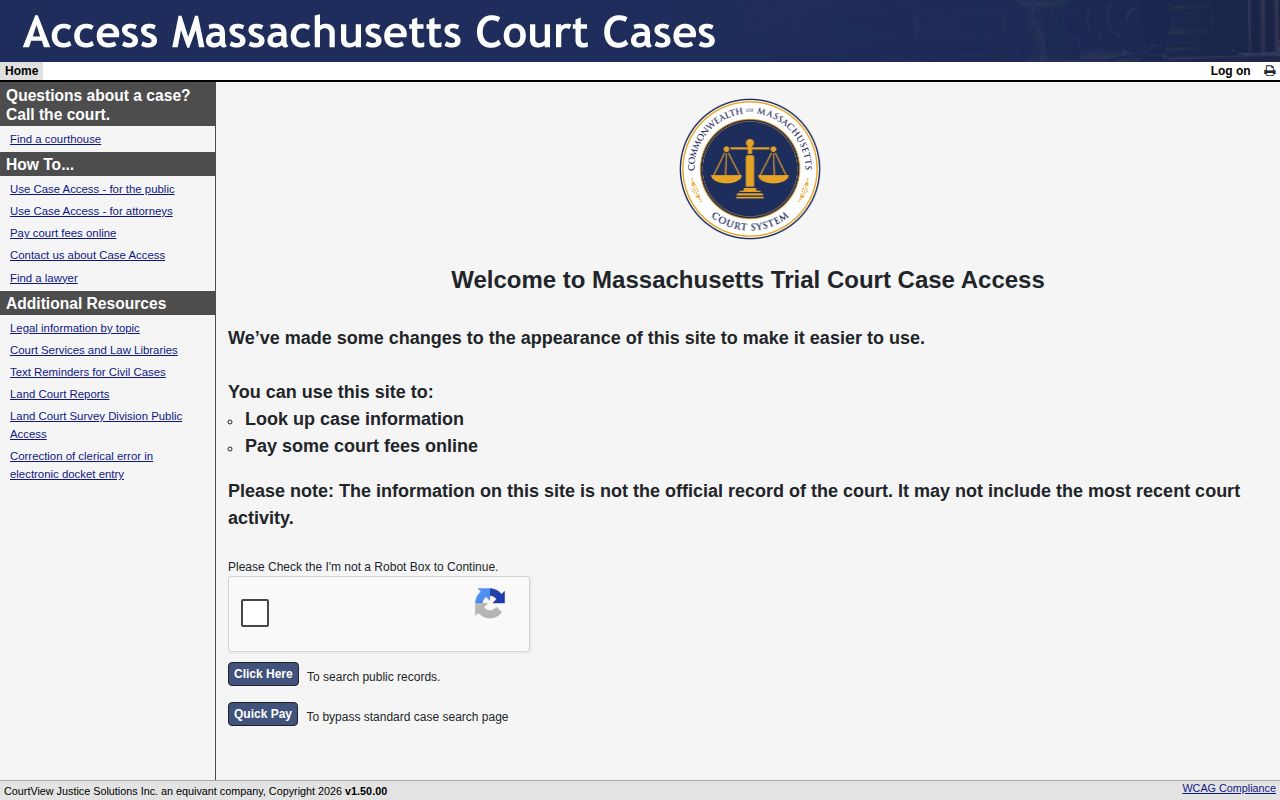
Compare the docket’s legal action with HCSO’s actual time and destination rather than treating either source as a complete custody timeline.